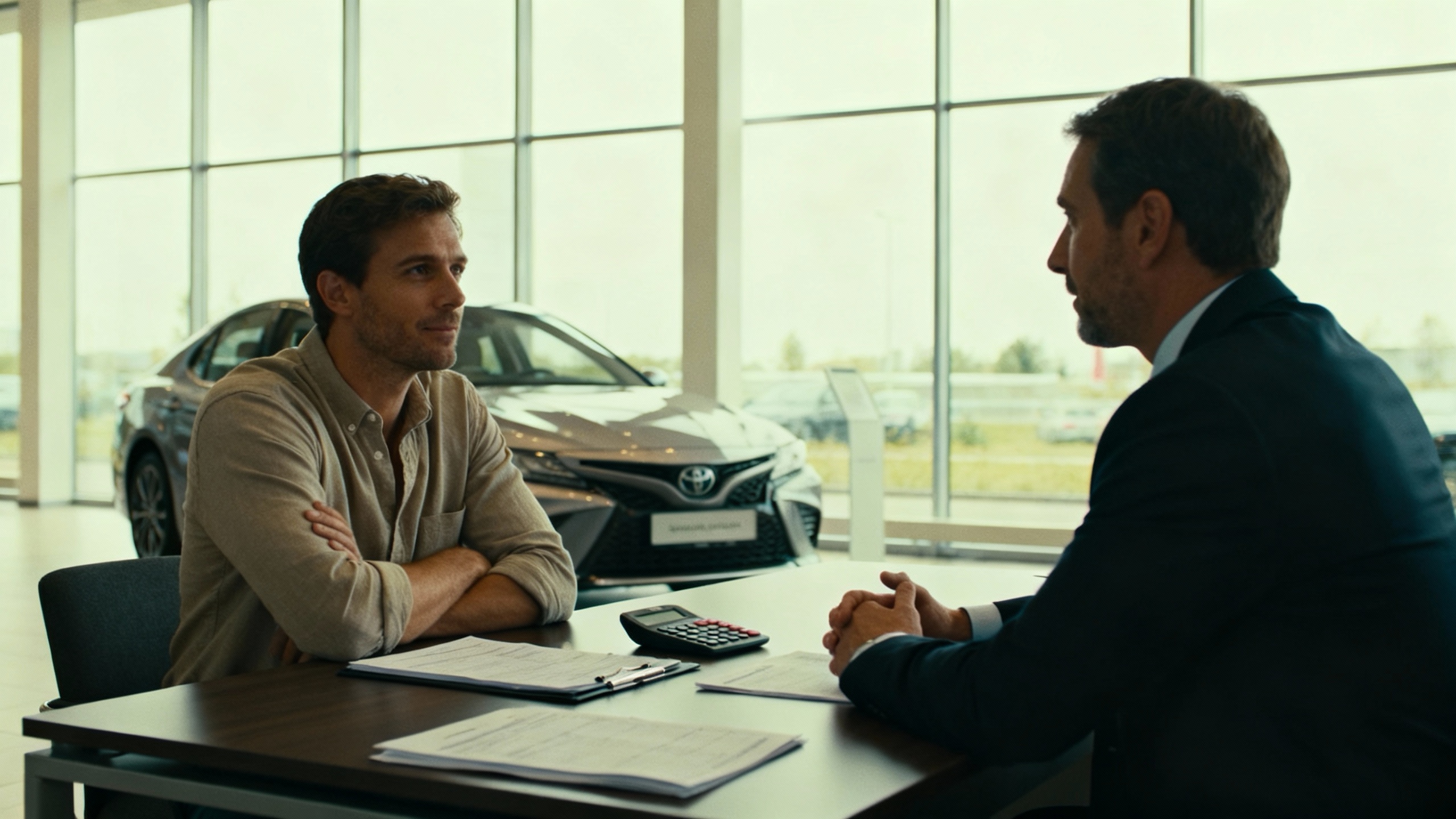
Buying a car isn’t just a purchase. It’s a negotiation battlefield.
The sticker price is not the real price.
The salesman knows it.
The dealership knows it.
The only person who sometimes doesn’t is the buyer.
If you walk in unprepared, emotional, or rushed, you’ll pay thousands more than you should. If you walk in calm, informed, and patient, you flip the power dynamic. This guide is about doing the second one.
First Rule: Price Is a Conversation, Not a Fact
That number on the windshield is a suggestion.
Dealerships price cars with wiggle room built in, expecting negotiation. If you accept the first number, you’re donating money to their profit margin.
Your job is not to be polite.
Your job is to be reasonable and informed.
Silence, pauses, and questions are weapons here. Use them.
Do Your Homework Before You Ever Show Up
Never negotiate blind.
Before stepping onto a lot, you should already know:
- The market value of the car
- Typical prices for the same model, year, and mileage
- Known issues or recalls
- How long that model usually sits unsold
This information gives you leverage. It also keeps you from reacting emotionally when numbers start flying.
When you know the market, the conversation shifts from “Can I afford this?” to “Convince me.”
Never Talk Monthly Payments First
This is where people get trapped.
Salespeople love to ask, “What monthly payment are you looking for?”
That question hides the real cost.
Always negotiate:
- Total price of the car
- Out the door cost
- Fees included
Monthly payments can be manipulated endlessly by stretching loan terms. A lower monthly number can still mean you’re paying more overall.
If they push payments, bring it back to price. Calmly. Every time.
Start Lower Than You Think Is Reasonable
Negotiation is a range.
If the car is listed at $20,000 and you think $18,500 is fair, you don’t start at $18,500. You start lower and let the discussion move upward.
Why? Because compromise usually lands in the middle.
You are not being rude. You are setting the floor.
If they counter immediately, you know there was room. If they hesitate, you just learned something valuable.
Use Silence Like a Tool
One of the most powerful moves in negotiation is not speaking.
When they present a price, don’t react right away.
Look at the paperwork.
Pause.
Breathe.
People feel uncomfortable filling silence. Salespeople often start negotiating against themselves.
The first person to rush usually loses.
Be Ready to Walk Away (And Mean It)
This is the most important rule.
If you are not willing to walk away, you are not negotiating. You are hoping.
There will always be another car.
There will always be another dealership.
There will always be another opportunity.
When they sense you’re emotionally attached, the leverage shifts back to them. When they sense you’re fine leaving, prices soften.
Sometimes the best counteroffer is standing up.
Don’t Let Extras Sneak In
Extended warranties, paint protection, VIN etching, fabric treatments. These are profit boosters, not necessities.
If you want extras, negotiate them after the price is locked.
If you don’t want them, say no once and don’t explain.
You don’t owe justification for protecting your money.
Timing Matters More Than People Think
Dealerships are businesses with quotas.
End of the month, end of the quarter, and slow sales days create opportunity. When numbers matter more than margins, negotiation becomes easier.
You don’t need to rush. Let time work for you.
Final Thought: You’re Not Begging. You’re Buying.
Haggling isn’t confrontation. It’s alignment.
You’re aligning price with reality.
You’re aligning cost with value.
You’re aligning the deal with your terms.
Stay calm. Stay informed. Stay willing to walk.
That’s how you haggle a car price and leave with both the car and your money intact.